After the Workshop
Capacity-building programs gain lasting force when learning becomes community ownership, organizational practice, or public policy.
Author: Alejandra Montemayor Loyo
Editor: Mónica Ramírez Hartmann
A capacity-building program can be well designed, well attended, and genuinely useful while leaving the surrounding system unchanged. Participants may gain skills and confidence, then return to institutions with the same budgets, incentives, decision structures, and barriers to access. The workshop succeeds on its own terms. The conditions that made it necessary remain in place.
This distinction matters in cultural sectors marked by fragile institutions, concentrated resources, political discontinuity, and unequal access to infrastructure. Training is often asked to compensate for those conditions. Funders count participants, sessions, and completed projects because those results are visible within a grant period. Evidence that knowledge has changed an organization, community, or policy takes longer to appear.
Research by Alejandra Montemayor Loyo across three organizations in Mexico and the United Kingdom suggests a more exacting question: where does the learning live after the program ends? Knowledge held by one participant may disappear when that person changes jobs. Knowledge embedded in a local team, operating routine, funding requirement, or coalition can continue to shape decisions.
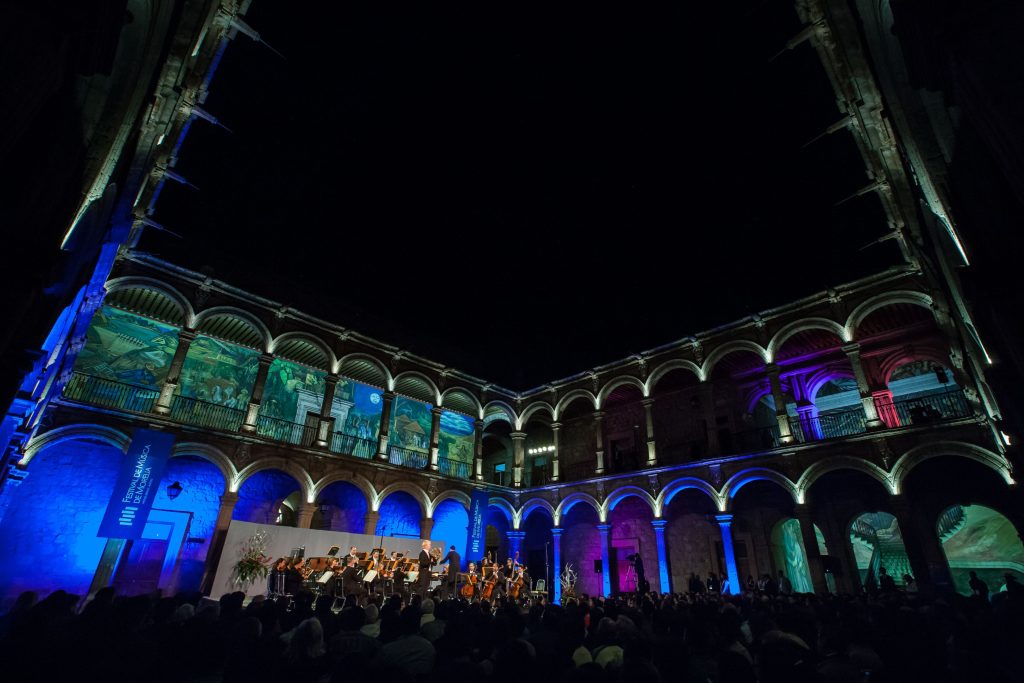
The Festival de Música de Morelia shows how continuity and relationships can sustain an artistic ecosystem, along with the succession risks created by highly personalized networks. Isla Urbana shows why infrastructure counts for little if communities cannot adopt, maintain, and adapt it. Julie’s Bicycle shows how research and training can influence the rules governing an entire publicly funded portfolio. Together, the cases trace the movement from individual capability to collective capacity and, eventually, structural change.
The Workshop Is the Beginning
Capacity building is often described as a transfer: an expert provides knowledge and a participant receives it. That model works for a discrete technical skill. It is too narrow for challenges that depend on many actors changing their behaviour together.
A cultural manager can learn fundraising strategy, for example, but cannot diversify revenue without leadership approval, usable data, staff time, and relationships with funders. An organization can train employees in environmental practice, but procurement rules, building systems, reporting requirements, and public funding may still reward old behaviour. A community may receive new infrastructure, but long-term use depends on ownership, maintenance knowledge, cultural fit, and the ability to repair it.
Systemic ambition therefore changes the design brief. A program needs to identify which decisions should change, who has authority over them, and what must remain after the trainer or funder leaves. Learning is one input. Adoption, institutionalization, and shared control determine its lifespan.
Continuity Builds Strength and Dependency
The Festival de Música de Morelia Miguel Bernal Jiménez has operated since 1989. Alongside international concert programming, it connects artists, educational institutions, sponsors, public authorities, and local audiences. Its social and academic work includes the Orquesta y Coros Miguel Bernal Jiménez and the Sinfonietta, which provide music education and development opportunities for children, young people, and emerging musicians.
Morelia’s wider musical ecosystem includes the Conservatorio de las Rosas and the city’s designation as a UNESCO Creative City of Music in 2017. The festival operates within that dense institutional history. Its influence comes partly from sustained relationships and the credibility accumulated through repeated artistic, educational, and civic activity.
In an interview conducted for the case study, a festival representative described sponsor relationships, advisory structures, artistic collaboration, and trust as essential to continuity. This is capacity held between organizations. The festival can convene people and resources because partners know its work and have reasons to return.
The same model contains a vulnerability. When fundraising, sponsorship, and institutional memory depend heavily on a small number of leaders and their personal relationships, continuity can conceal fragility. A long-running organization may still struggle to transfer knowledge or authority when leadership changes.
For capacity-building programs, the case points toward a practical distinction. Relationships are essential infrastructure, but they become institutional capacity only when others can understand, maintain, and extend them. Shared records, distributed partner stewardship, documented decisions, succession plans, and opportunities for emerging leaders reduce the risk that an ecosystem loses access when one person departs.
Adoption Is a Better Test Than Delivery
Isla Urbana works in water infrastructure. Its rainwater-harvesting programs offer a useful comparison because they expose the difference between installing a solution and building the capacity to use it.
The organization works in urban communities, schools, and rural and Indigenous territories across Mexico. Its Ha Ta Tukari program in the Wixárika Sierra combines rainwater systems with education, training, community engagement, and locally led implementation. Isla Urbana reports that a Wixárika intercultural team now carries much of the work across the region, including construction, teaching, and water management in local language and context.
An interview for Montemayor Loyo’s research contrasted large government-supported rollouts with smaller, co-created projects. Large programs delivered higher installation numbers, according to the interviewee, but often allowed less time for participation and sustained use. Community-designed projects generated stronger ownership and adoption.
This is a critical warning for cultural organizations under pressure to scale. The number of people reached may describe distribution without revealing whether anyone has gained durable capability. Replication can also strip away the local relationships and adaptations that made the original program work.
Adoption requires more than satisfaction at the end of a session. Participants need a reason and an opportunity to use the learning. They may need equipment, a budget, decision rights, peer support, access to mentors, or permission to revise the method. Evaluation should return after enough time has passed to see whether practice changed and whether local actors can troubleshoot without the original provider.
The stronger form of scale may therefore be the spread of ownership. A locally led team capable of adapting a method can create greater long-term reach than a central organization delivering every intervention itself.
Policy Makes Capacity Collective
Julie’s Bicycle provides the clearest example of capacity building entering an institutional system. The organization began in 2007 by convening music-industry representatives and working with Oxford University’s Environmental Change Institute to research the sector’s carbon footprint. That evidence helped define a shared problem. Julie’s Bicycle then developed tools, training, networks, and advocacy that enabled cultural organizations to act on it.
Its long partnership with Arts Council England moved environmental practice into the conditions surrounding public cultural funding. National Portfolio Organisations and Investment Principles
Support Organisations report environmental information through Creative Climate Tools, contributing to sector-wide learning and annual reporting. An organization’s new environmental knowledge is therefore reinforced by a recurring institutional expectation, common tools, and comparable data.
The sequence matters. Research established credibility. Tools made action possible. Training built literacy. Reporting requirements created an ongoing reason to use the capability. Collective data then supported further learning and accountability. Capacity moved from individuals into organizational routines and funding infrastructure.
This model has limits. Reporting can become a compliance exercise. Organizations vary greatly in buildings, budgets, staffing, and control over emissions. Julie’s Bicycle’s interview for the case study also acknowledged funding instability, fragmented cultural ecosystems, and incomplete representation of Global South perspectives in climate policy. A common standard can coordinate action while still reflecting the institutions that had the most power to define it.
Policy influence should therefore remain connected to participation. The people expected to implement a standard need ways to shape it, explain contextual limits, and contribute knowledge from practice. Otherwise, capacity building at scale can replace one gap with another: organizations learn how to report without gaining the authority or resources to change.
Three Places Where Capacity Can Live
The cases suggest three related levels of capacity:
- Individual capability. A person gains knowledge, confidence, contacts, or a technical skill. This is a valuable result, especially when access to professional development is unequal.
- Collective practice. A team, organization, or community changes how it works. Knowledge appears in roles, budgets, routines, governance, local leadership, documentation, and repeated decisions.
- Ecosystem infrastructure. Multiple organizations work through shared standards, networks, funding conditions, data, policy, or durable mechanisms for cooperation.
Each level can represent worthwhile progress. Programs should describe their intended level honestly. A two-day course cannot be credited with transforming a sector because participants enjoyed it or reported greater confidence. A policy framework cannot demonstrate systemic progress if organizations lack the means to implement it.
The levels help funders and program designers choose appropriate evidence. Individual learning can be assessed soon after participation. Collective practice requires later observation of behaviour, decisions, and resource use. Ecosystem change requires evidence across institutions and time, including who gained influence and which inequalities persisted.
Designing for What Happens Next
Before launching a capacity-building initiative, cultural leaders can ask six questions:
- Which recurring decision should change? Define the behaviour, routine, allocation, or policy that the learning is meant to influence.
- Who has the authority to make that change? Participants need access to decision-makers or a mandate to act.
- What resources make adoption possible? Time, tools, staff, money, data, and peer support often matter as much as knowledge.
- Where will the capability reside? Decide how it will enter a role, local team, budget, process, standard, or partnership.
- What might be lost through scale? Track participation, cultural fit, local ownership, and the burden placed on smaller organizations.
- What will be examined after twelve or twenty-four months? Measure repeated use, adaptation, continuation, and changed relationships, alongside reach.
These questions have direct relevance to Montemayor Loyo’s work in creative-economy and arts programming in Mexico. International exchanges, fellowships, workshops, and professional-development programs can connect participants to valuable knowledge and networks. Their systemic potential depends on the next institutional step: an employer changes a practice, alumni gain a role in program governance, a funder adjusts its criteria, a community takes control of delivery, or a coalition continues without the original convenor.
A participant’s new skill is a meaningful result. A structural result appears when people can use that skill to change what their institutions and communities repeatedly do. The most revealing evaluation begins after the workshop room has emptied.
Research Note
This article draws on semi-structured interviews conducted by the author with representatives of the Festival de Música de Morelia Miguel Bernal Jiménez, Isla Urbana, and Julie’s Bicycle. The interviews addressed governance, institutional sustainability, community participation, policy influence, coalition-building, and long-term adoption. The author also reviewed organizational reports, program documentation, public communications, the Isla Urbana annual report and Ha Ta Tukari materials, Julie’s Bicycle resources and environmental reporting, and UNESCO documentation concerning Morelia’s Creative City of Music designation. The source does not identify the interviewees by name or role; those details should be added before publication if permission allows.
Selected Sources
- Festival de Música de Morelia: Festival History
- Festival de Música de Morelia: Social and Academic Projects
- UNESCO: Morelia Creative City Monitoring Report
- Isla Urbana: Ha Ta Tukari and Rural Rainwater Systems
- Isla Urbana: Ha Ta Tukari, A New Chapter in the Wixárika Sierra
- Julie’s Bicycle: Arts Council England Environmental Programme
- Julie’s Bicycle: Environmental Reporting for Funded Organizations