Beyond the Book
Independent publishers can use audience knowledge to widen access while keeping editorial judgment in charge.
Author: Andrea Ruy Sánchez de Orellana
Editor: Mónica Ramírez Hartmann
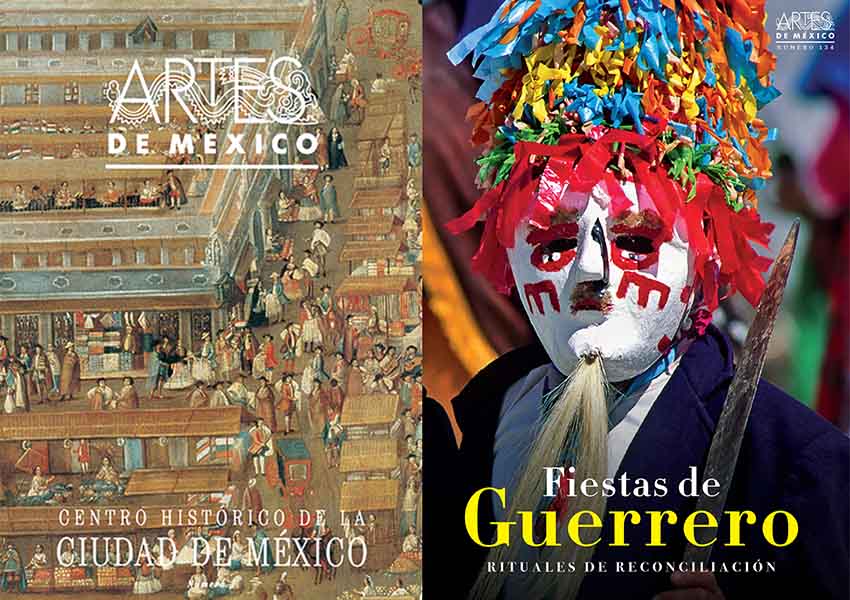
Artes de México has spent decades building what many independent publishers want and few can purchase: a recognizable editorial voice. Readers know the organization for its exacting visual language and its treatment of Mexican art, history and everyday culture. That reputation gives each publication a context before a reader opens it.
The same reputation can create distance. Andrea Ruy Sánchez de Orellana, Director of Projects at Artes de México, observed during this case study that younger audiences do not always see the publisher as contemporary or participatory. Its authority remains closely associated with its founders and history. A legacy that attracts loyal readers may therefore make renewal harder to see.
This tension reaches beyond one publisher. Independent presses face pressure to improve metadata, digital distribution and online visibility while competing with every other demand on an audience’s time. The tools matter, but they cannot decide which ideas deserve attention or what kind of relationship a cultural publisher should build.
The strategic question is: How can an independent publisher turn cultural trust into active audience participation without allowing demand data to narrow its editorial purpose? Research into Penguin Random House Mexico, Lecturable and Artes de México suggests that the answer begins by treating visibility, audience knowledge and institutional trust as connected forms of editorial work.
When Authority Creates Distance
Artes de México describes itself as a cultural project that uses an editorial strategy to explore and disseminate the cultures of Mexico. Its magazine-book remains central, supported by collections for different audiences and languages. The organization has accumulated a catalog, archive, network of contributors and reputation for curatorial care over more than three decades.
These assets are difficult for a competitor to reproduce. In a crowded information environment, a trusted publisher helps readers decide where to direct attention. It selects, connects and interprets material that might otherwise remain scattered. Cultural authority gives an independent publisher a reason to exist beyond the sale of an individual title.
Authority becomes vulnerable when readers encounter accumulated prestige without seeing a current invitation. Ruy Sánchez’s internal knowledge of Artes de México revealed two linked risks. The first is succession: trust attached mainly to founders may weaken when leadership changes. The second is relevance: a distinguished brand can appear closed to people who expect conversation, participation and a visible place for new voices.
Renewal cannot be reduced to a younger visual identity or a busier social feed. The deeper work is to show how the institution’s editorial values operate now, who is invited to shape them and how readers can enter the conversation.
Visibility Is Part of the Editorial Work
Penguin Random House Mexico provides a useful contrast in scale. The company has specialist teams across editorial, marketing, digital production, sales and logistics, along with a large catalog in print, digital and audio formats. Its resources allow it to distribute risk and coordinate visibility across many titles and channels.
In an interview conducted for the case study, Head of Digital Sales Alejandro McKelligan described digital performance, title onboarding and distribution systems. For an independent publisher, the value of this case lies in what the machinery accomplishes and which pieces can be adapted at smaller scale. A book needs accurate metadata, consistent placement and a clear path through retailers and search systems before a potential reader can consider it.
Metadata may look administrative, yet it determines whether a title enters a search result, appears in the right category or reaches a retailer with enough information to sell it. Weak metadata turns a rich catalog into a collection of hard-to-find objects. Discoverability therefore belongs inside publishing strategy, early enough to shape how a title enters the market.
Scale also has costs. Large organizations must coordinate decisions across functions, formats and markets. Independent publishers can often move faster and explain their editorial choices more directly. Their disadvantage lies in limited money and reach. Their advantage lies in the ability to connect visibility to a coherent point of view.
For a small publisher, the practical starting point is a catalog audit. Titles should have complete descriptions, subject classifications, contributor information, rights data, images and links suited to the channels where readers search. Responsibility for maintaining that information must be assigned. A neglected catalog cannot build an audience simply because the books are valuable.
Audience Data Has a Boundary
Lecturable shifts the analysis from the catalog to the reader’s path. The Mexico City agency designs strategies for the book industry and works across commercialization, digital environments and collective initiatives. Its approach asks where readers encounter a title, what prevents them from continuing and how publishers can improve access across formats and platforms.
Carlos Rojas, a co-founder of Lecturable, discussed metadata, discoverability and publishing innovation with Ruy Sánchez. That exchange led to a company-wide metadata session at Artes de México and continued work on its catalog. The case demonstrates the value of targeted external expertise: a small publisher can improve a technical capability without trying to recreate a large digital department.
Audience knowledge can reveal friction. Search data may show that a title is poorly described. Event attendance can indicate which partnerships bring unfamiliar people into a space. Newsletter behavior can show whether readers return after a purchase. Conversations with visitors can expose assumptions that the organization has stopped noticing.
These signals have limits. Existing demand reflects what audiences already know, what platforms choose to display and who has access to the channel being measured. If a publisher treats those signals as editorial instructions, unfamiliar authors and difficult subjects can disappear from consideration. Cultural publishing also creates demand by introducing ideas and forms that readers have not yet encountered.
The boundary is operational. Audience evidence should guide access, format, language, timing and the design of an encounter. Editorial judgment should continue to govern cultural purpose. That division allows a publisher to become easier to enter without making popularity the test of value.
From Readers to Participants
Ruy Sánchez’s strongest proposal for Artes de México is a shift from readers to participants. Books remain the editorial center, while workshops, exhibitions, conversations, education programs and digital communities give people additional ways to engage with the questions inside them.
Participation is useful when it extends the editorial project. An event designed only to promote a new title adds activity without necessarily deepening the relationship. A program that invites readers, artists or local partners to interpret an archive can generate new knowledge, reveal future collaborators and make the institution’s point of view tangible.
This approach can also support revenue diversification. Educational programs, memberships, partnerships, events, special editions and cultural experiences may reduce dependence on individual book sales. Each activity still needs a plausible audience, owner, budget and measure of success. Mission alignment does not remove financial discipline.
Artes de México already has the raw material for such experiments: a deep catalog, visual archives, contributor networks, a physical space and readers with longstanding affinity. Its task is to connect those assets in ways that allow new audiences to take part. For another independent publisher, the assets may be a specialist subject, regional network, translation expertise or a distinctive group of authors.
Making Trust Institutional
Audience participation will have limited value if cultural trust cannot survive leadership change. Independent publishers often depend on the taste, relationships and persistence of a founder. Those qualities create the institution, but they can remain tacit and difficult to transfer.
Publishers can begin by documenting how editorial choices are made, which standards remain fixed and where experimentation is welcome. Commissioning and partnership decisions should involve more than one generation or professional network. Archives can be treated as working material for new programs instead of evidence of past achievement. Public-facing work should make the institution’s curatorial method visible, allowing readers to trust a practice as well as a personality.
Progress requires measures suited to the objective. Catalog completeness and search visibility show whether books can be found. Repeat attendance, newsletter retention and movement between events and purchases indicate whether contact becomes a relationship. Contributor diversity and the number of projects shaped with external partners offer evidence of renewal. Revenue by activity shows which experiments can continue without exhausting the organization.
No single indicator proves cultural relevance. Together, these measures can show whether an independent publisher is becoming more accessible, more connected and less dependent on one person while retaining a distinct editorial position.
What the Book Can Open
Penguin Random House shows the systems required to make a catalog visible. Lecturable shows how audience behavior can expose barriers and guide implementation. Artes de México shows why discoverability and engagement matter: they can carry a trusted editorial project into another generation.
Independent publishers lack both the means and strategic reason to imitate the scale of a multinational group or follow every shift in platform behavior. Their priorities are to make the work findable, learn where audiences encounter friction and create credible ways for people to participate. Editorial trust must also move from individual founders into practices that colleagues, contributors and readers can recognize.
A book remains the center of the work when it opens a sustained cultural relationship. The publisher’s role then extends from producing an object to maintaining the conditions in which its ideas can be found, debated and carried forward.
Research Note
This article draws on research conducted by Andrea Ruy Sánchez de Orellana with three reference organizations in Mexico City. She interviewed Alejandro McKelligan, Head of Digital Sales at Penguin Random House Mexico, about digital publishing and distribution, and Carlos Rojas, co-founder of Lecturable, about metadata, discoverability and publishing innovation. The Lecturable engagement continued through a metadata training session and catalog work with Artes de México. As Director of Projects at Artes de México, Ruy Sánchez also drew on interviews with colleagues, internal materials, operational knowledge and direct observation. A conversation with editor Mario Jursich informed the article’s treatment of editorial judgment and community. No confidential financial or sales information has been included.